1. Why did you become a children's author?
I originally wanted to write movie scripts, and Ratnapped was written very much like a script. I spent a lot of time reading screenplays and studying dialogue. New York inspired my creativity in so many ways. It also made me realize there were countless stories and experiences I could turn into children’s books. Once I finished my first book, I fell in love with writing for children and never looked back.
2. Where do you get your ideas?
I find inspiration everywhere and I’m constantly taking photos of places, people, and little details that catch my attention. I also draw heavily from my childhood. I moved around a lot as a kid and had a very adventurous upbringing, which gave me plenty of ideas. But I don’t only write from my own experiences—I pay attention to the world around me and let everyday life inspire new stories. I believe every person, place, and experience has the potential to become a story.
3. What inspires you the most as a writer?
I find inspiration everywhere. Travel, animals, childhood memories, and everyday life all spark new ideas. I love taking photos and paying attention to the little details that most people walk past. New York had a huge influence on my creativity because living there encouraged me to observe the world differently and inspired many of my stories. I also draw from my adventurous childhood and the many places I’ve lived. Every experience, conversation, and journey has the potential to become a story. I believe inspiration is all around us—you just have to keep your eyes open.
4. What message do you hope children take away from your books?
I want children to enjoy my stories and learn from them. I hope they feel inspired, treat others with kindness, and realize they are capable of overcoming challenges. I want my books to encourage curiosity, empathy, and hope without feeling like lessons. Most of all, I want children to finish my books believing that they matter and that they can make a difference.
5. How do you plan your stories?
Some stories take weeks, some months, and others years to develop. A great example is From Paris to New York – A Pigeon Story. It was years before I felt I had found the right story. I think about my books constantly, even when I’m falling asleep, and I keep notebooks full of ideas. I rarely know exactly how a story will end when I begin. Instead, I let it evolve naturally as the characters and the story grow. Over time I’ve learned that editing is where a story truly comes to life. Every revision makes the story clearer, stronger, and more meaningful.
6. Why do you use animals instead of people as your main characters?
Many of my books explore deep or emotional topics. Using animals makes those themes a little more approachable for children. Young readers have to use their imagination, and that creates some useful distance and difficult conversations feel gentler. Children tend to stay focused on the story and the message.
7. How do you choose which animals to use in each book?
It is mostly a question of which animals work best for the story. I want to write about as many different animals as I can so that young readers can learn about them. Sometimes there are too many possibilities and I have to narrow my options down, especially if two animals are quite similar. I also think about each animal’s attributes and temperament and how those can be used to advance the story in unique ways.
8. Why do you pick animals like raccoons, pigeons, beavers, and rats that are generally regarded as pests – or at least unwanted guests?
That’s a very intentional choice. I often use rats as a stand-in for people, especially in cities. There’s a reason it’s called the “rat race.” We are all just trying to get by and survive – and it’s the same for rats. We are all survivors in our own way. I enjoy giving overlooked animals the chance to become heroes.
9. Do you have any favorite authors?
I really like Maurice Sendak, who wrote Where the Wild Things Are. I love how he used a dream to take a child on a magical adventure that still felt safe. I also enjoy Neil Gaiman because he creates imaginative worlds that children often experience as adventures and adults can enjoy for their darker subtext and allegory.
10. Any favorite artists?
I really like Vincent van Gogh. His art is beautiful and I find his life story fascinating. His paintings remind me that creativity often comes from seeing the world differently.
11. How long does it take to create a picture book?
Ratnapped took me about ten years to develop. During that time, I learned an incredible amount about storytelling, editing and rewriting. One of the biggest lessons I learned was the importance of having other people read your work. When you’ve lived with a story for a long time, it becomes difficult to see what needs improving. A good editor is invaluable. Beyond writing, there are so many other processes involved: the illustrating, the revising, the designing, the formatting, the copywriting, and, of course, the publishing. Creating a picture book is a long process, but every step makes the end product stronger.
12. How do you tell your artists what to draw?
I include illustration notes in the manuscript and gather lots of reference images to convey the look and mood I’m trying to create. I have a very clear vision, but sometimes it takes a few attempts to communicate it. I enjoy working closely with illustrators because they often bring ideas to life in ways I never imagined.
13. How do you decide exactly where the illustrations should go?
I read a lot of children’s books and study how they are illustrated. Where the Wild Things Are has been a huge influence in that respect. I also think about where a picture can tell the story better than words. Sometimes an illustration says far more than a paragraph ever could.
14. How would you describe your writing style?
Probably something like whimsical realism. I want my stories to feel real while still being imaginative and comforting. I enjoy exploring real emotions through gentle adventures that leave children feeling hopeful.
15. Which of your books are your personal favorites?
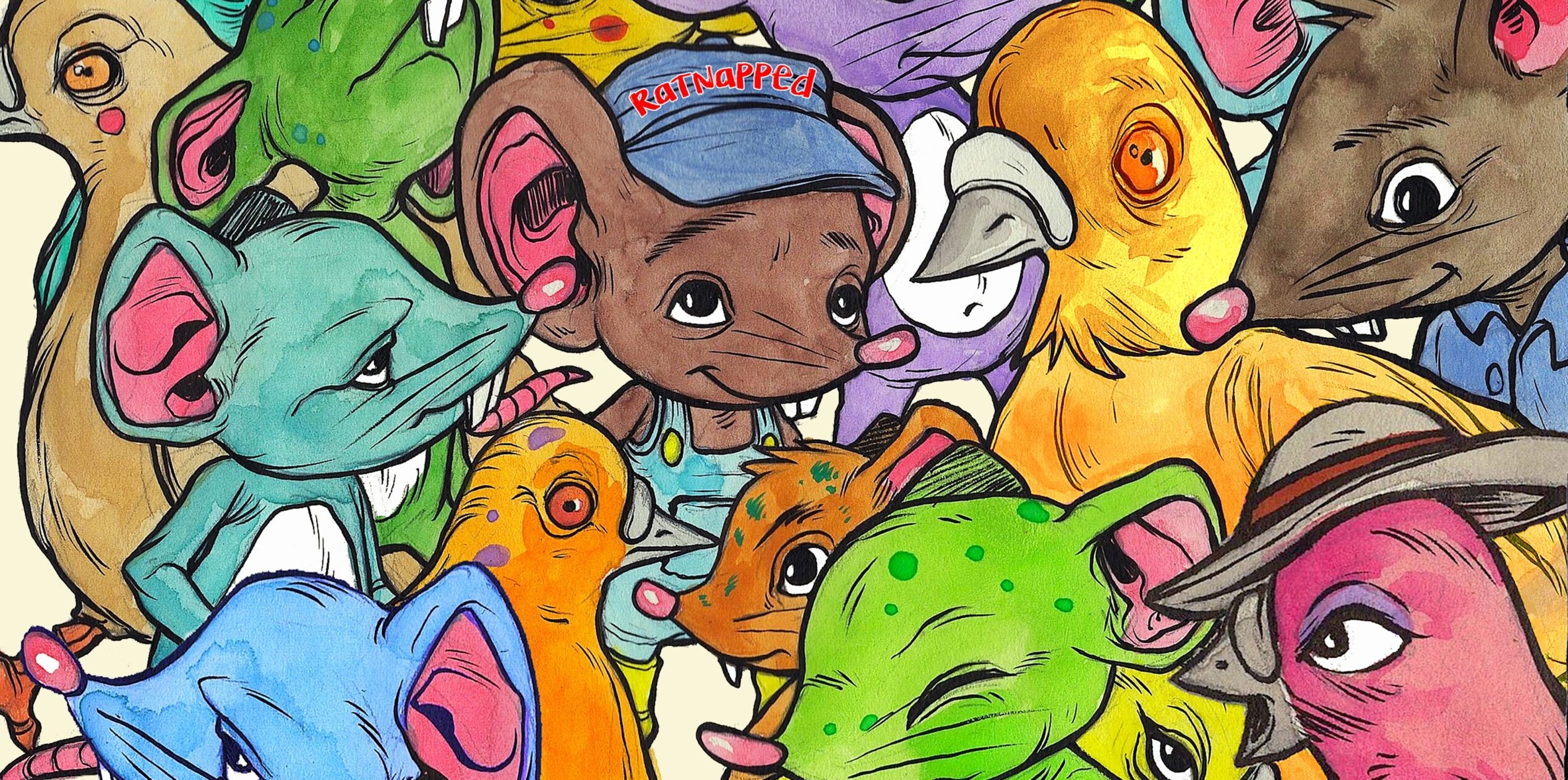
Definitely Ratnapped and Zali’s Outback Adventure. Ratnapped is where it all began. It was the book that taught me how to tell a story. Zali is based on a real-life experience that I think many families can relate to. It’s also true that each new book teaches me something, so in a way my favorite is always changing.
16. Are you going to write more books set in Australia, like Zali?
Yes, definitely! There are so many interesting animals in Australia, and I can’t wait to explore more stories set there.
17. Which character is most like you?
Cecil from Ratnapped is probably the character most like me. I wrote much of his journey from the perspective of how I felt as a child. His determination and curiosity reflect a lot of who I am.
18. Which of your books did you enjoy writing most?
Ratnapped will always be special because it taught me how to write. It introduced me to storytelling and made writing Zali’s Outback Adventure much easier. At first, starting new books was intimidating, but now I genuinely enjoy beginning new stories. I often feel that my newest book is my best book because I’m always learning and growing as a writer.
19. What advice would you give young writers?
Don’t wait until you feel ready. Start writing now. Make mistakes, learn from them, rewrite, and keep going. For years I stayed focused on one book because I was afraid to move on. Looking back, I wish I had started writing more stories sooner. Every book teaches you something new, and every finished manuscript makes you a better writer. The most important thing is to keep writing. Every story brings you one step closer to becoming the writer you want to be.
20. What's next?
I want to continue writing children’s books but also return to screenplays, which is where my writing journey began. I have several script ideas I’d love to develop. Over time I’ve found that the more I write, the more creative I become, so I’m excited to keep creating new stories. My goal is to keep telling stories that make children smile, think, and feel understood.